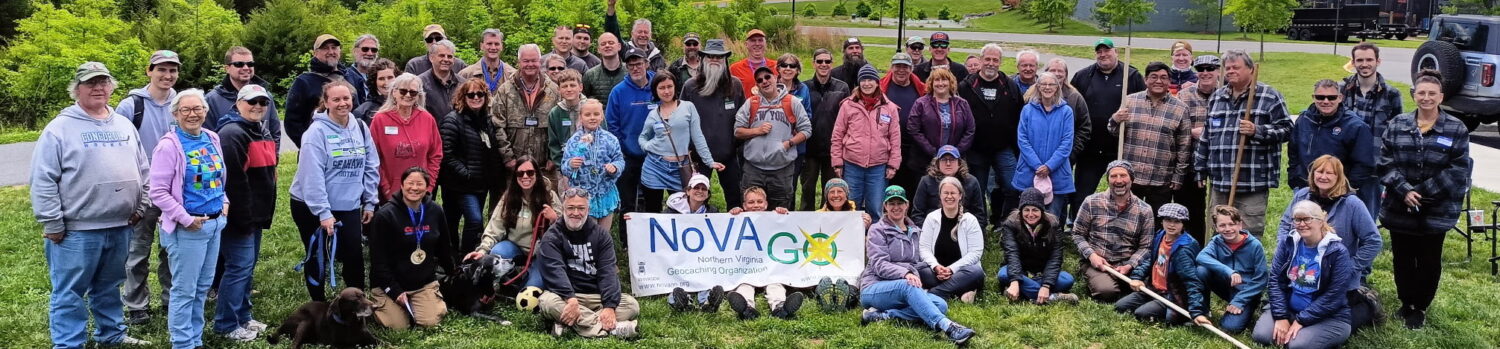
Meet “Reedkickball” – A NoVAGO Volunteer in Focus
Reedkickball has experienced NoVAGO from many sides over the years — as a member discovering the hobby, a volunteer helping shape the club, a former President guiding its direction, and a community reviewer seeing geocaching from a broader perspective. His story offers a unique look at how a local geocaching club grows, changes, and continues to bring people together.
Reedkickball was interviewed for NoVAGO in 2008. You can find that article HERE.
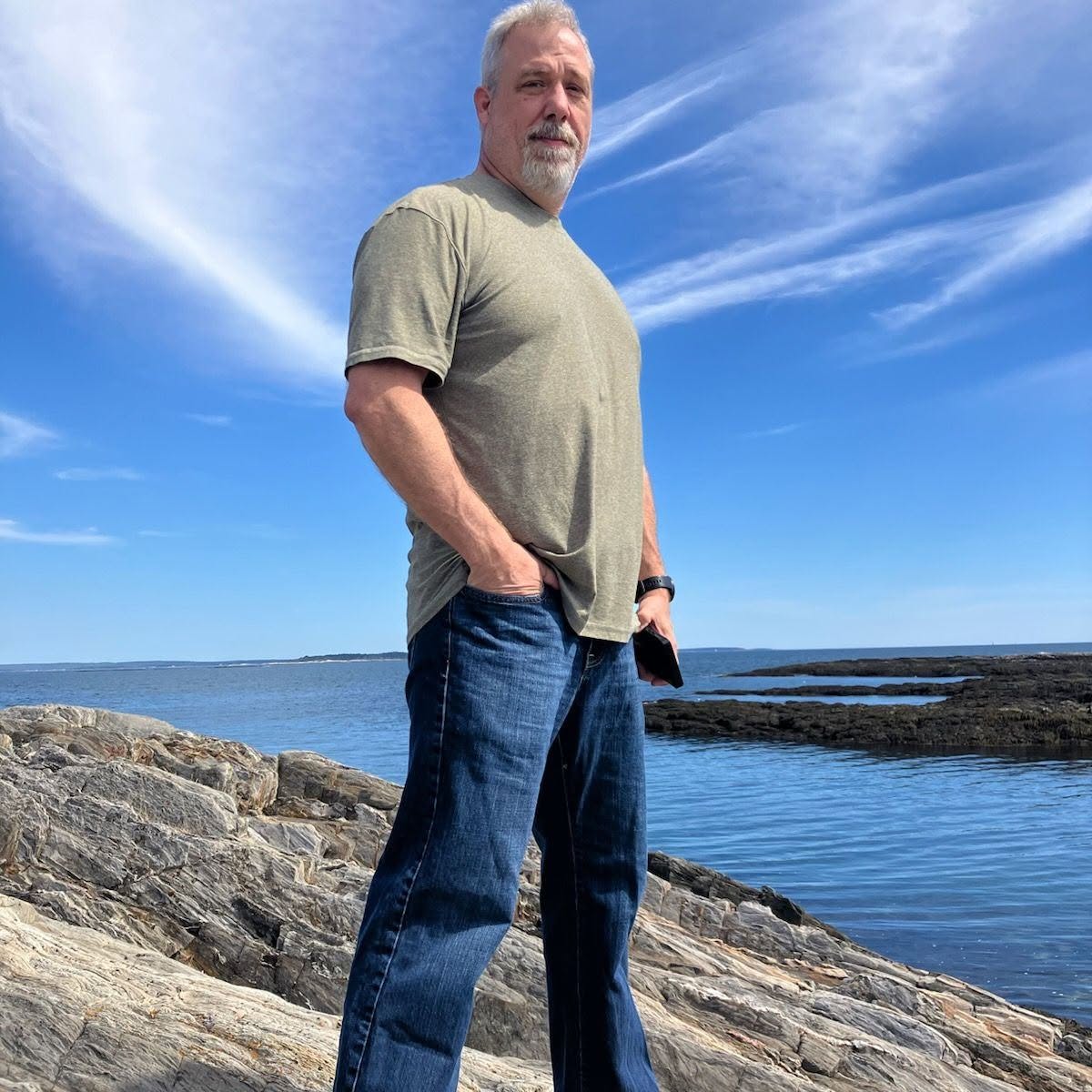
An explorer at heart, Reedkickball is happiest when a geocache leads him somewhere new. But his contributions extend well beyond finding caches. Through years of land-management outreach and community reviewing, he’s helped create opportunities for countless other geocachers to explore, too.
Meet Reedkickball
Caching name: Born on a high school soccer field in Germany, where teammates would yell “Reed Kick Ball!” as he charged down the field.
Geocaching since: 2006, introduced to the game by his cousins, Coalcachers.
Favorite adventures: Multi-caches, hiking, paddling, history, nature, and discovering interesting places.
Favorite caching destinations: Historical sites, interesting trails, and places that reveal Northern Virginia’s diverse geography.
NoVAGO President (2012)
Community Reviewer
Geocaching confession: Once thought people with thousands of finds “must have no life.” He has since
reconsidered!
Back in your 2008 Member Spotlight, you shared the story behind your geocaching name. Nearly twenty years later, does “reedkickball” still feel like it fits you, or has it taken on a different meaning through the geocaching community?
It certainly feels like it has taken on additional meaning. Many people have mispronounced my cacher name, but I’m pretty sure that’s common for others as well. I’ve also had people come up and start talking about the game of kickball, only to get a completely blank look from me.
I’ve thought about changing it to simply RKB, but those aren’t my initials, and it would remove a good conversation starter. It still feels like it fits me, even though I don’t play soccer anymore. It’s a name that’s unique to me.
Those first adventures were actually before I received the GPS. There were quite a few hikes through the Pennsylvania wilderness looking for geocaches. My cousins don’t log all their finds, so I could never figure out exactly which geocaches I found before creating my own account. It couldn’t have been more than 10 or 12.
Back then, when I looked up caches, I’d see geocachers with hundreds or even thousands of finds. I remember telling my cousins, “These people must have no life!”
That quote hasn’t aged particularly well, now that I have quite a few finds myself.
Do you think that experience influenced the way you’ve introduced other people to the hobby over the years?
My influence on people who don’t geocache hasn’t been particularly prolific. Most of my family members have their own accounts, but I don’t think any of them have reached 100 finds yet.
When it comes to coworkers, I’ll explain what I do, and a lot of them ask, “So what do you get for finding things?”
Then I have to explain that it isn’t about getting stuff. It’s about all the new and interesting places you get to visit.
In your 2008 interview, you talked about enjoying caches that highlighted history, nature, and interesting locations. What kinds of geocaching experiences still excite you today?
I still think that’s the case. I prefer interesting locations, nature, and history.
However, don’t take this the wrong way, but I’m not particularly enamored with certain cache types. If virtuals, EarthCaches, challenges, and gadget caches went away, I don’t think I’d be particularly sad. I still enjoy some of them, but they’re just not what draws me to geocaching. Some virtuals are interesting, though I often feel they’d be much better as multi-caches.
What got me into geocaching—and what keeps me interested—is the traveling, the locations, the hikes and paddles, and anything that gets me moving. This may seem strange, but I think I ultimately like multi-caches better than any other type. I know they’re not most people’s favorite, but I enjoy the adventure they usually take you on. You definitely need to carve out time to do them, though.
As for Adventure Labs, I really like the ones that lead you around a town or historical area and bring you to interesting locations.
The ones at rest areas, well…
How did you first become involved with NoVAGO?
My very first event was NoVAGO’s summer picnic in 2007. I was pretty apprehensive, as I’ve been an introvert most of my life. But I decided I was going to make an effort to meet people and make friends.
At the event, NoVAGO was putting together a puzzle featuring pictures of prominent NoVAGO members that people had to identify. They needed a few “nobodies” to fill out the grid, so I volunteered to be a nobody and had my picture taken alongside all those well-known NoVAGO members. The puzzle is still out there somewhere.
Later, I became much more involved with NoVAGO, although most of my efforts focused on working with land managers to obtain permission for geocaching. I spent a lot of time meeting with officials from various organizations, probably a dozen or so. Not all those discussions were fruitful, but some were wildly productive.
I think that work contributed to my being asked to serve as NoVAGO president in 2012. I started the term, but my wife’s health became a major issue that year, and I wasn’t really able to finish it as I’d hoped.
Later, because of my land management knowledge, I was offered the opportunity to become a reviewer. I declined the first time but was asked again when Honeychile retired. I accepted, and I think being a reviewer has helped keep me connected to the game, even during periods when I didn’t have much time to actually go geocaching.
What do you enjoy most about being part of the club?
I really like what NoVAGO has become. It’s a group that almost feels like family. It’s well-organized, and the volunteers do a great job of making geocaching fun, especially here in Northern Virginia.
Over the years, you have experienced NoVAGO from several perspectives—as a member, a volunteer, a board member, and through your role as a community reviewer. How has your perspective on the club changed as you have taken on those different roles?
The organization is so much better organized now. It really feels as though it’s no longer being run by just one or two people, but rather by a large, collaborative group of people with diverse backgrounds and interesting ideas.
Is there a NoVAGO event or tradition that you especially look forward to each year?
I’ve always tried to make it to the fall event. It seems to be the biggest event of the year, and there’s always the added benefit of an auction. There also almost always seems to be a good number of new geocaches placed around wherever the event is being held.
Many members know you as a geocacher, but you’re also a reviewer. You mentioned that it wasn’t a job you jumped into immediately. What is the story behind how that happened?
As I mentioned earlier, I did a lot of outreach to different land management agencies. At the same time, living farther south, I tended to know quite a few of the Fredericksburg geocachers.
I joined a team to work on the first Eye of Horus in Richmond (which unfortunately got archived before we finished). One of my teammates, whom I did a lot of scouting with, was Bozo, later known as Barkfeather. He was also offline.cacher, one of the longtime reviewers.
When I first befriended Art, he wasn’t a reviewer yet. But he knew about my extensive knowledge of parks in Northern Virginia. I also had access to all the county GIS systems, so I could figure out who owned just about any parcel of land.
That information is pretty publicly accessible now, but it wasn’t nearly as easy to obtain back then.
When Art became a reviewer, he started asking me for details about specific parcels of land and the rules that applied to them. So when the opportunity came along, it was natural for him to ask me to become a reviewer.
The first time he asked, I told him I’d only be interested in handling Northern Virginia because I didn’t want to learn the rest of the state. He said that wasn’t possible, so I declined.
A couple of years later, Honeychile, the other Virginia reviewer, was retiring. Art asked me again, and this time I accepted, with the assurance that I’d only have to do 10% of the work. I ended up doing much more than that, but I enjoyed it.
What is something about geocaching behind the scenes that you think most players do not realize?
Even though I’m a reviewer, I don’t work for Geocaching.com. I’m a volunteer who applies the rules and guidelines that I’m given.
Do I agree with all of them? No.
But I’m always willing to offer suggestions on how to make a cache idea work within those guidelines.
Our community is fortunate to have volunteers like you who step up to take on responsibilities that most players never have to think about. Your time and dedication help keep the game running and make geocaching possible for the rest of us. We genuinely appreciate your willingness to serve in this role!
Has being involved with the review process changed the way you approach finding or hiding geocaches?
I can no longer play the FTF game, so I might be stuck at around 300 FTFs for the time being. But I really stopped playing that game when Dot Plotter stopped reviewing.
Additionally, when I come across geocaches that I know aren’t compliant, sometimes I have to set aside my reviewer hat and just be a geocacher, rather than a geocaching rule lawyer.
What advice would you give to someone who is thinking about volunteering but isn’t sure where to start?
If someone wants to volunteer, I’d encourage them to contact the NoVAGO president or one of the other officers and simply ask, “How can I help?”
I know there’s always another task that someone can take on to help make NoVAGO run more smoothly.
Is there anything you’d still like to do in geocaching or with NoVAGO that you haven’t tried yet?
I haven’t done a long road trip devoted entirely to geocaching. Most of my trips have been day trips from one place to another.
There are still so many places I want to see.